Key Differences Between Analogue and IP CCTV Cameras
Image Quality and Resolution
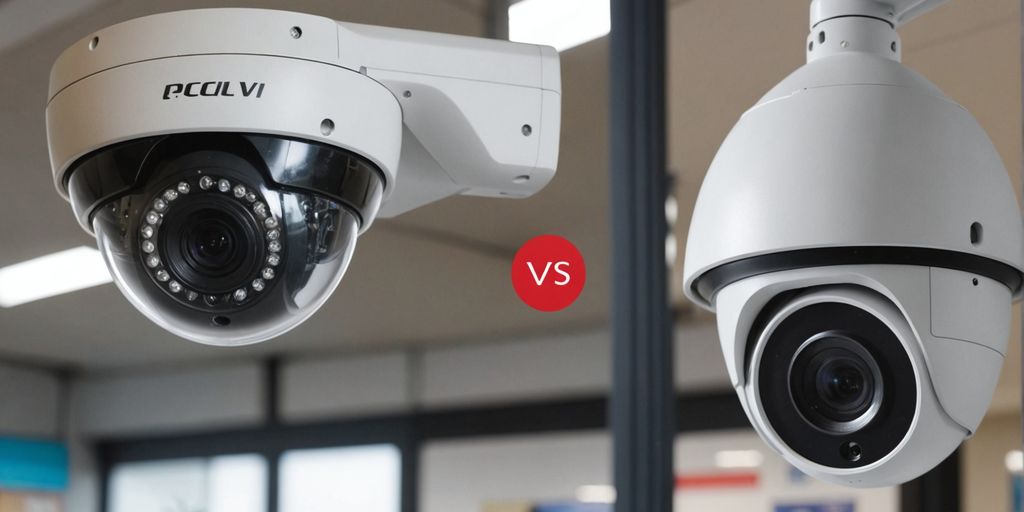
Analogue cameras typically offer lower resolution compared to IP cameras. IP cameras can provide high-definition video, making it easier to identify details like faces and licence plates. Analogue cameras are limited by the broadcast standards, which cap their resolution.
Transmission Methods
Analogue cameras transmit video signals over coaxial cables, which can pick up noise and degrade the image quality. In contrast, IP cameras send data over a network, allowing for higher quality and more reliable transmission. This also means that IP cameras can be accessed remotely, unlike their analogue counterparts.
Installation and Scalability
Installing analogue cameras is generally simpler and less expensive initially. However, they are less scalable. Adding more cameras often requires additional cabling and infrastructure. IP cameras, on the other hand, can be easily added to an existing network, making them more scalable and flexible.
Cost Considerations
While the initial cost of analogue cameras is lower, the long-term costs can add up due to maintenance and scalability issues. IP cameras may have a higher upfront cost, but they offer better long-term value through easier maintenance and scalability. Investing in IP cameras can be more cost-effective in the long run.
Advantages of IP CCTV Systems
Superior Image Quality
IP CCTV systems offer superior image quality compared to analogue systems. They provide high-definition video, which makes it easier to identify details and faces. This is crucial for security purposes, as clearer images can lead to better identification and evidence.
Remote Access and Control
One of the standout features of IP CCTV systems is the ability to access and control cameras remotely. This means you can monitor your property from anywhere in the world using a computer or mobile device. This level of accessibility is not possible with traditional analogue systems.
Integration with Other Systems
IP CCTV systems can easily integrate with other security systems, such as alarms and access control systems. This integration allows for a more comprehensive security solution, where different systems can work together seamlessly to enhance overall security.
Future-Proofing and Scalability
IP CCTV systems are designed to be scalable and future-proof. As your security needs grow, you can easily add more cameras and upgrade your system without significant overhauls. This flexibility makes IP systems a long-term investment that can adapt to changing requirements.
IP CCTV systems not only offer better image quality and remote access but also provide the flexibility to integrate with other security measures, making them a versatile and future-proof choice for modern security needs.
Challenges and Considerations in Switching to IP CCTV
Switching from analogue to IP CCTV systems presents several challenges and considerations that need to be addressed for a successful transition. While the benefits of IP-based systems are significant, the process involves overcoming various technical, financial, and operational hurdles.
Technical Barriers
One of the primary challenges in switching to IP CCTV is the technical barrier. Existing infrastructure may not support the new technology, requiring substantial upgrades. Network requirements for IP cameras are more demanding, needing higher bandwidth and reliable connectivity. Additionally, the integration of IP cameras with existing systems can be complex, often necessitating specialised knowledge and skills.
Cost Implications
The cost implications of transitioning to IP CCTV systems can be substantial. Initial setup costs are generally higher due to the need for new equipment and infrastructure upgrades. However, it’s important to consider the long-term savings and benefits. While the upfront investment is significant, IP systems often offer lower ongoing maintenance costs and greater scalability.
Training and Education
Switching to IP CCTV systems also requires adequate training and education for the personnel involved. Staff members need to be familiar with the new technology to operate and maintain the system effectively. This includes understanding the network requirements, camera configurations, and troubleshooting common issues. Investing in training programmes is essential to ensure a smooth transition and optimal performance of the new system.
Compatibility Issues
Compatibility issues can arise when integrating IP cameras with existing analogue systems. Ensuring that all components work seamlessly together is crucial for effective surveillance. This may involve using hybrid systems or converters to bridge the gap between old and new technologies. Careful planning and consideration are necessary to address these compatibility challenges and ensure a cohesive system.
Transitioning to IP CCTV systems is a complex process that requires careful planning and consideration of various factors. By addressing technical barriers, cost implications, training needs, and compatibility issues, organisations can successfully make the switch and enjoy the benefits of modern surveillance technology.
Real-World Applications and Case Studies
Retail and Commercial Spaces
CCTV systems are widely used in retail and commercial spaces to deter theft, monitor customer activity, and ensure employee safety. Visible cameras can significantly reduce shoplifting incidents. Additionally, recorded footage can aid in resolving disputes and investigating incidents.
Public Safety and Law Enforcement
In public safety and law enforcement, CCTV cameras play a crucial role. They help monitor public areas, manage crowds, and provide evidence in criminal investigations. High-definition cameras can capture detailed images, which are essential for identifying suspects and vehicles.
Residential Security
For residential security, CCTV systems offer peace of mind to homeowners. They can monitor entrances, driveways, and other vulnerable areas. Remote access features allow homeowners to view live footage from anywhere, enhancing their sense of security.
Industrial and Critical Infrastructure
In industrial settings and critical infrastructure, CCTV systems are used to monitor operations, ensure safety, and protect assets. They can help detect equipment failures, monitor hazardous areas, and prevent unauthorised access. The ability to integrate with other security systems makes them invaluable in these environments.
CCTV technology has evolved to meet the diverse needs of various sectors, providing tailored solutions that enhance security and operational efficiency.
Conclusion
In summary, both analogue and IP CCTV systems have their unique strengths and weaknesses. Analogue cameras, with their simplicity and reliability, are often favoured for smaller, straightforward setups. On the other hand, IP cameras offer superior image quality, scalability, and advanced features, making them ideal for larger, more complex installations. As technology continues to evolve, the gap between these two types of systems is likely to widen, with IP cameras leading the way in innovation. Ultimately, the choice between analogue and IP will depend on your specific needs and circumstances. By understanding the differences, you can make an informed decision that best suits your security requirements.
Frequently Asked Questions
What is the main difference between analogue and IP CCTV cameras?
The main difference lies in how they transmit video. Analogue cameras send video over coaxial cables to a recorder, while IP cameras send video as digital data over a network, offering higher resolution and more features.
Are IP cameras more expensive than analogue cameras?
Initially, IP cameras can be more expensive due to their advanced technology. However, they often save money in the long run with better image quality, easier installation, and scalability.
Can I use my existing analogue cameras with a new IP system?
Yes, you can use existing analogue cameras with an IP system by using a video encoder. This device converts the analogue signal to digital, allowing it to be integrated into the IP network.