Understanding Analogue CCTV Technology
How Analogue Cameras Work
Analogue CCTV cameras capture video images using a sensor. The resolution of this sensor is typically limited to 720×575 pixels. The video is captured in 60 intervals called "fields," and two fields make up a "frame." This method is known as interlaced transmission. The video signal is then transmitted to a recording device via a single coaxial cable, adhering to broadcast television standards like NTSC or PAL.
Limitations of Analogue Systems
Analogue systems have several limitations. The fixed number of horizontal lines in NTSC or PAL standards caps the vertical resolution. Additionally, analogue signals can pick up noise, which can degrade the video quality. Noise can cause compression artefacts in recordings, making it difficult to identify details like licence plates or faces. Moreover, analogue TV standards introduce imperfections, such as false colours in black-and-white images.
Common Uses for Analogue CCTV
Despite their limitations, analogue CCTV systems are still widely used. They are often found in older buildings and smaller installations where high resolution is not critical. These systems are also popular in applications where cost is a significant factor, as they are generally less expensive than IP systems. Analogue systems are often used in residential settings, small businesses, and some public spaces.
Analogue CCTV systems have been around for over 50 years and continue to serve as a reliable option for basic surveillance needs.
Exploring IP CCTV Technology
How IP Cameras Function
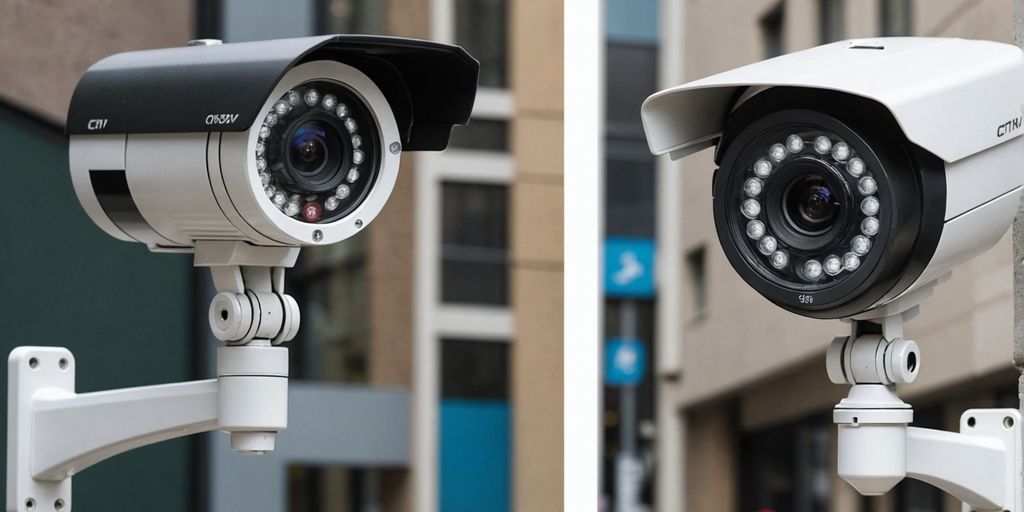
IP cameras, also known as network cameras, capture video footage and transmit it over an IP network. Unlike analogue cameras, which send video signals to a DVR, IP cameras encode the video digitally and send it directly to a network video recorder (NVR) or other storage devices. This digital transmission ensures that the video quality remains high and does not degrade over time. Additionally, IP cameras can be accessed remotely, allowing users to view live footage from anywhere with an internet connection.
Advantages of IP Systems
IP CCTV systems offer several benefits over their analogue counterparts:
- Higher Resolution: IP cameras typically provide higher resolution images, which means clearer and more detailed footage.
- Scalability: Adding more cameras to an IP system is easier and more flexible, as it often only requires network connectivity rather than additional cabling.
- Remote Access: Users can access live and recorded footage from any location, enhancing convenience and security.
- Advanced Features: Many IP cameras come with built-in features such as motion detection, tampering alerts, and video analytics.
- Integration: IP systems can integrate with other security systems, such as access control and alarm systems, providing a comprehensive security solution.
Applications of IP CCTV
IP CCTV systems are versatile and can be used in various settings, including:
- Commercial Buildings: For monitoring entrances, exits, and common areas.
- Residential Properties: To keep an eye on the perimeter and interior of homes.
- Public Spaces: Such as parks, streets, and transportation hubs for enhanced public safety.
- Industrial Sites: For overseeing operations and ensuring safety compliance.
- Retail Stores: To prevent theft and monitor customer activity.
IP cameras offer a modern solution to surveillance needs, combining high-quality video, remote accessibility, and advanced features to provide a robust security system.
Comparing Analogue and IP CCTV Systems
Image Quality and Resolution
When it comes to image quality, IP cameras generally offer superior resolution compared to analogue systems. Analogue cameras are limited by their older technology, often maxing out at 720×575 pixels. In contrast, IP cameras can provide high-definition images, making it easier to identify details like faces or licence plates. This difference in resolution can be crucial for effective security monitoring.
Installation and Maintenance
Installing and maintaining these systems also varies significantly. Analogue systems require long coaxial cables, which can be cumbersome and expensive to install. On the other hand, IP systems use Ethernet cables, which are easier to install and can even support wireless connections. Regular maintenance is essential for both types, but IP systems often come with advanced features like remote monitoring, making upkeep simpler.
Cost Considerations
Cost is another important factor to consider. Analogue systems are generally cheaper upfront, making them a popular choice for smaller budgets. However, the long-term costs can add up due to the need for regular maintenance and potential upgrades. IP systems may have a higher initial cost, but they offer better scalability and lower maintenance costs over time. Investing in IP technology can be more cost-effective in the long run.
When choosing between analogue and IP CCTV systems, it’s essential to consider not just the initial cost but also the long-term benefits and maintenance requirements. Regular maintenance, upgrading technology, and implementing immediate response strategies can enhance security and deter intruders.
Making the Right Choice for Your Needs
Choosing between analogue and IP CCTV systems can be challenging. This section will guide you through the process of making an informed decision based on your specific requirements.
Assessing Your Security Requirements
First, identify your primary security needs. Are you looking to monitor a large area or focus on specific entry points? Understanding your security goals will help you decide which system is best suited for your needs. For instance, if you need high-resolution footage for facial recognition, an IP system might be more appropriate.
Future-Proofing Your Investment
Consider the longevity of the system you choose. IP systems are generally more adaptable to future technological advancements. They offer better scalability, allowing you to add more cameras and features as your needs grow. On the other hand, analogue systems might be less expensive initially but could become obsolete more quickly.
Expert Recommendations
Consulting with a security specialist can provide valuable insights. They can assess your property and recommend the most suitable system. Additionally, they can help you understand the risks associated with different security options, ensuring you make a well-informed decision.
Conclusion
In the end, choosing between analogue and IP CCTV systems boils down to your specific needs and circumstances. Analogue systems, with their simplicity and lower cost, might be suitable for smaller, less complex installations. On the other hand, IP systems offer superior image quality, scalability, and advanced features, making them ideal for larger or more demanding environments. As technology continues to evolve, IP cameras are becoming more accessible and affordable, bridging the gap between the two. Whichever you choose, understanding the strengths and limitations of each will help you make an informed decision, ensuring your security needs are met effectively.
Frequently Asked Questions
What is the main difference between analogue and IP CCTV cameras?
Analogue CCTV cameras send video over coaxial cables to a recorder, while IP cameras send video as data over a network. This allows IP cameras to offer higher resolution and more features.
Are IP cameras more expensive than analogue cameras?
IP cameras can be more expensive upfront, but they often save money in the long run due to easier installation, better image quality, and more advanced features.
Can I mix analogue and IP cameras in the same system?
Yes, you can mix both types using a hybrid DVR or NVR, which allows you to connect both analogue and IP cameras to the same recording system.